
Before Leaferry existed, I spent more than ten years as a software engineer. My days ran on logic, two monitors, and systems that updated by the millisecond. Everything I built lived behind glass, and by the next quarter most of it was rewritten or replaced.
At home, as a father of two daughters, I wanted to make something physical — an object you could hold in your palm that belonged to a slower clock.
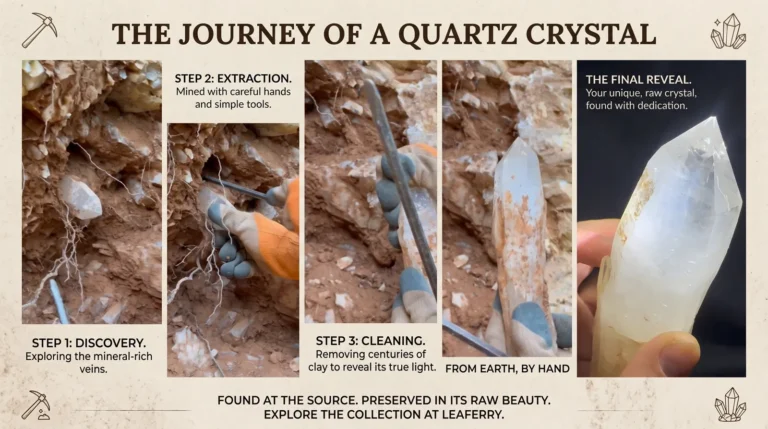
What drew me to natural stone was its indifference to hurry. A piece of nephrite or quartz takes millions of years of subterranean heat and pressure to form. When you pick up a piece of rough stone, it is cold, dense, and quiet. It doesn’t buzz, it doesn’t ask for a reply, and it warms to the skin the longer you hold it.
The First Leaf
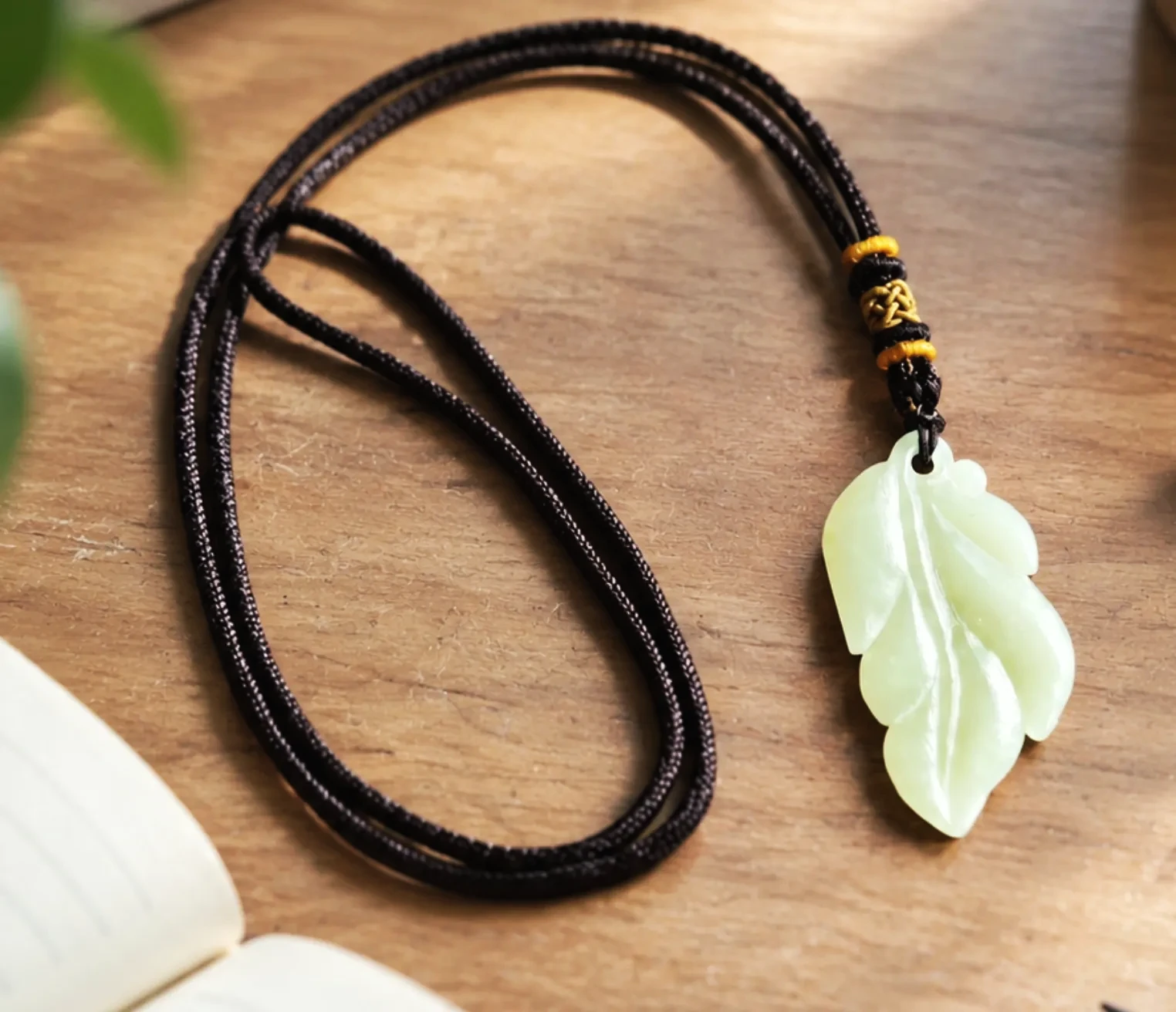
The first piece I ever shaped by hand was never a business plan, and it was never meant to be sold. It was a small jade leaf pendant for my daughter.
That evening I sat down at the desk with a rotary burr, a shallow water tray, and a pale green slice of nephrite rough. Working stone under water is slow work. White stone dust settles over your knuckles as the burr cuts the outline, and you have to rinse the surface every few minutes just to see how deep the leaf veins are going.
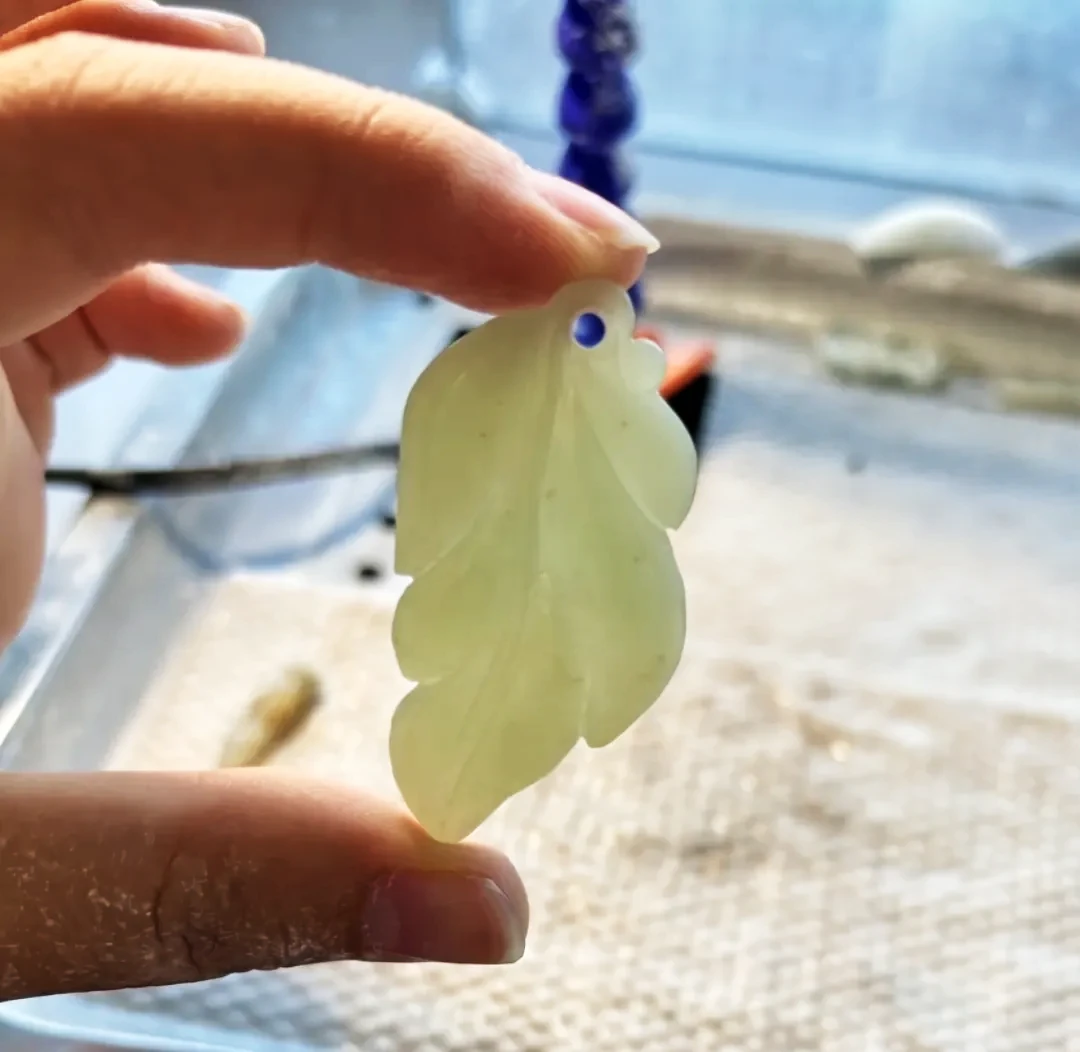
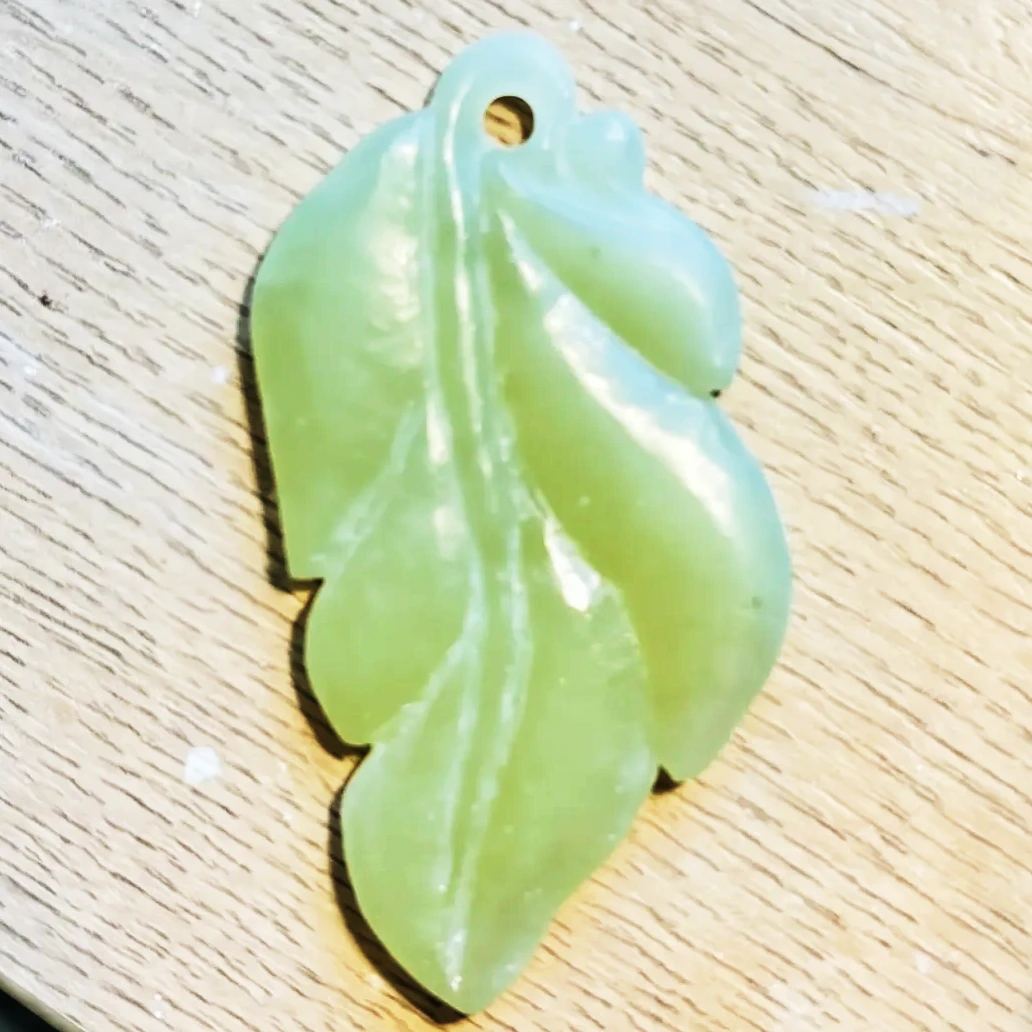
It was far from machine-uniform — the bevels held the slight hesitation of someone learning the grain of the stone. When the surface was finally smooth enough to sit comfortably against bare skin, I strung it onto a dark braided cord and gave it to my daughter.
She wore it to school, through summers at the park, and on ordinary weekdays. Years later, that small green leaf is still in our house, its surface softened by daily touch.
Why the Name “Leaferry”
When that single pendant eventually grew into an independent studio, I joined two plain words to name it: Leaf and Ferry.
The first green thing out of the ground, shaped after that first carved pendant. It doesn’t hurry.
A boat crossing water from one shore to another. Slow, steady, no wake.
We don’t sell shine. We take something that sat in the ground for millions of years and put it in your hand.
From One Stone to a Studio Standard
Shaping that first leaf taught me two things that still govern how Leaferry runs today. First, natural mineral grain has a quiet presence no dyed glass or factory plastic can imitate. Second, an everyday piece of jewelry feels different when someone has actually held it, checked its edges, and cared about how it sits on the collarbone.
Today, Leaferry is a small studio working with a handful of specialized workshops — one for stone cutting, another for wire settings, another for braided cord. We don’t claim every piece in our catalog was forged in a cabin by a lone hermit. What is true is more practical: each part is made where that specific technique is done well, and every finished piece comes across my desk for inspection before it ships.
- Stones Chosen for Grain, Not Uniformity We work with natural jade, quartz, labradorite, and opal. Because every stone is cut from rough mineral, grain, cloudy patches, and color shift naturally from piece to piece. You won’t receive a stamped clone — you receive a stone with its own geological markings.
- Metals Named Plainly on Every Listing Different stones call for different settings — antiqued bronze, plated finishes, tarnish-resistant alloy, or solid 925 sterling silver. Rather than using one catch-all claim across the shop, each product page states the exact metal and cord used.
- Checked by Hand Under Daylight Before any piece is sealed into its protective pouch and placed in our green drawer box, I check it by hand under natural daylight — clasp tension, cord knots, setting edges against the skin, and a clean wipe-down of the stone.
Quiet Adornments for Everyday Wear
We don’t make vault jewelry meant to shout across a crowded room, and we don’t run seasonal drops or artificial markdowns. We make pieces for people who keep wearing the same two or three things for years — sized and finished to survive a commute, a workday, and a normal amount of neglect.
It doesn’t demand attention. It simply accompanies you.
Find the One You Keep Coming Back To.
Explore our small catalog of natural stone pendants and cord necklaces — checked by hand under daylight and packed ready to give.